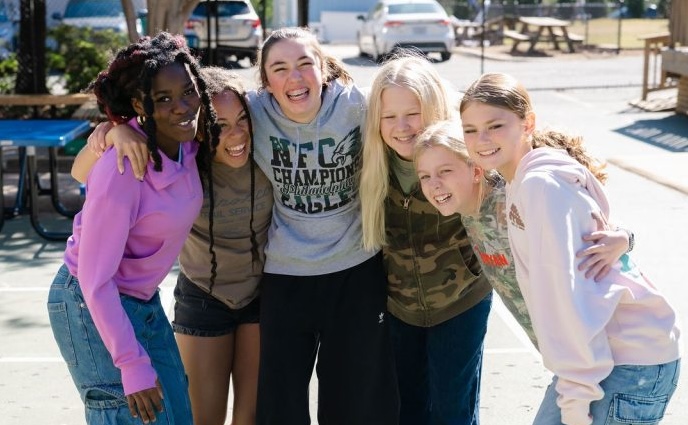
In grades five through eight, students take on challenging ideas and more responsibility for their learning. With about 20 students in each grade, teachers know them well and help them stay curious, manage their work, and speak up when they need help.
Across subjects, students read closely, investigate, weigh evidence, and explain their thinking. Teachers push each student and offer the guidance each one needs to do their best work.
English
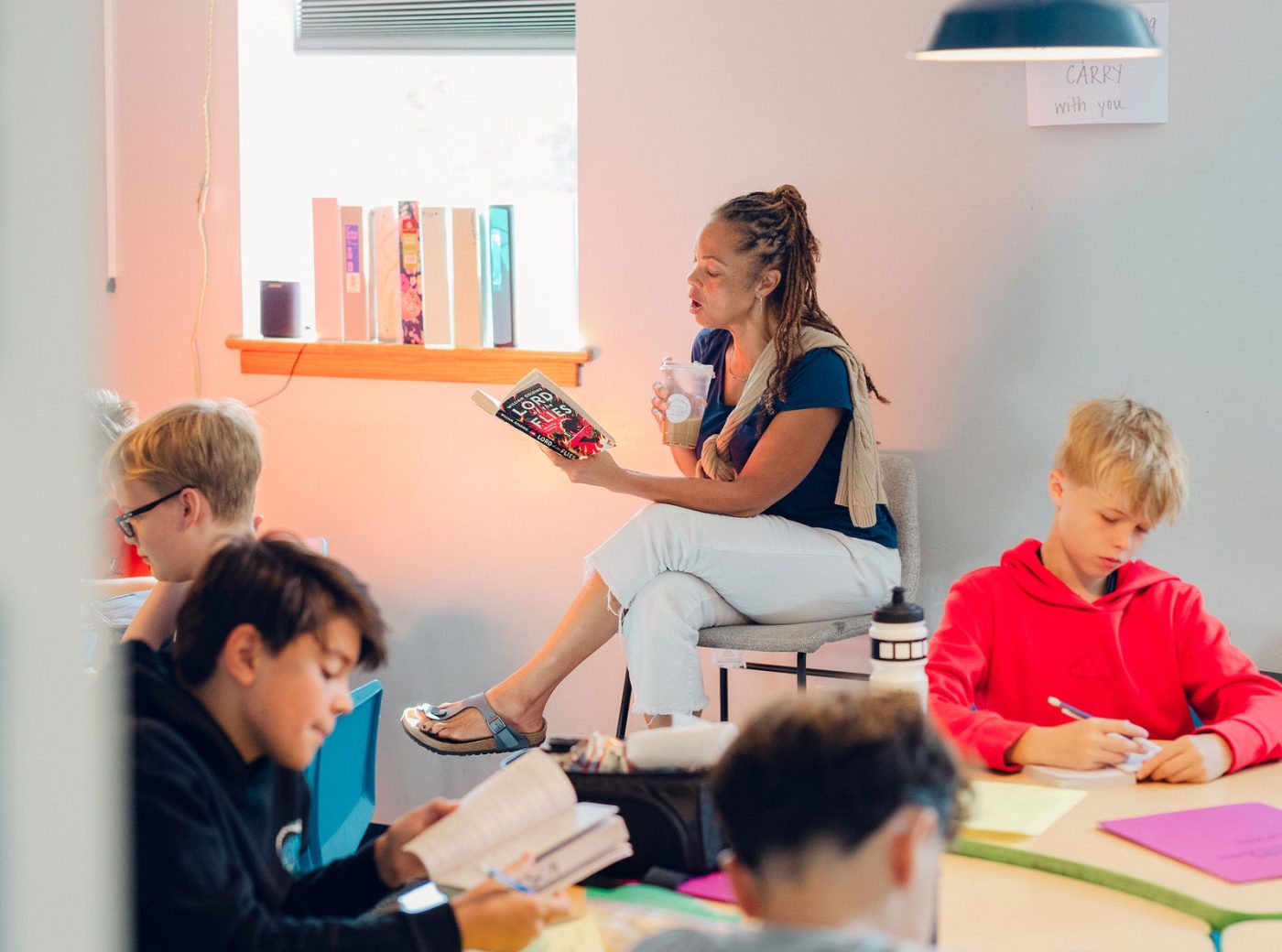
Novels and historical texts help students grow as confident readers, writers, speakers, and critical thinkers. Through close reading, annotation, discussion, and writing, they consider questions of heroism, human nature, and whose voices shape a story, then connect those ideas to the world beyond the classroom.
History
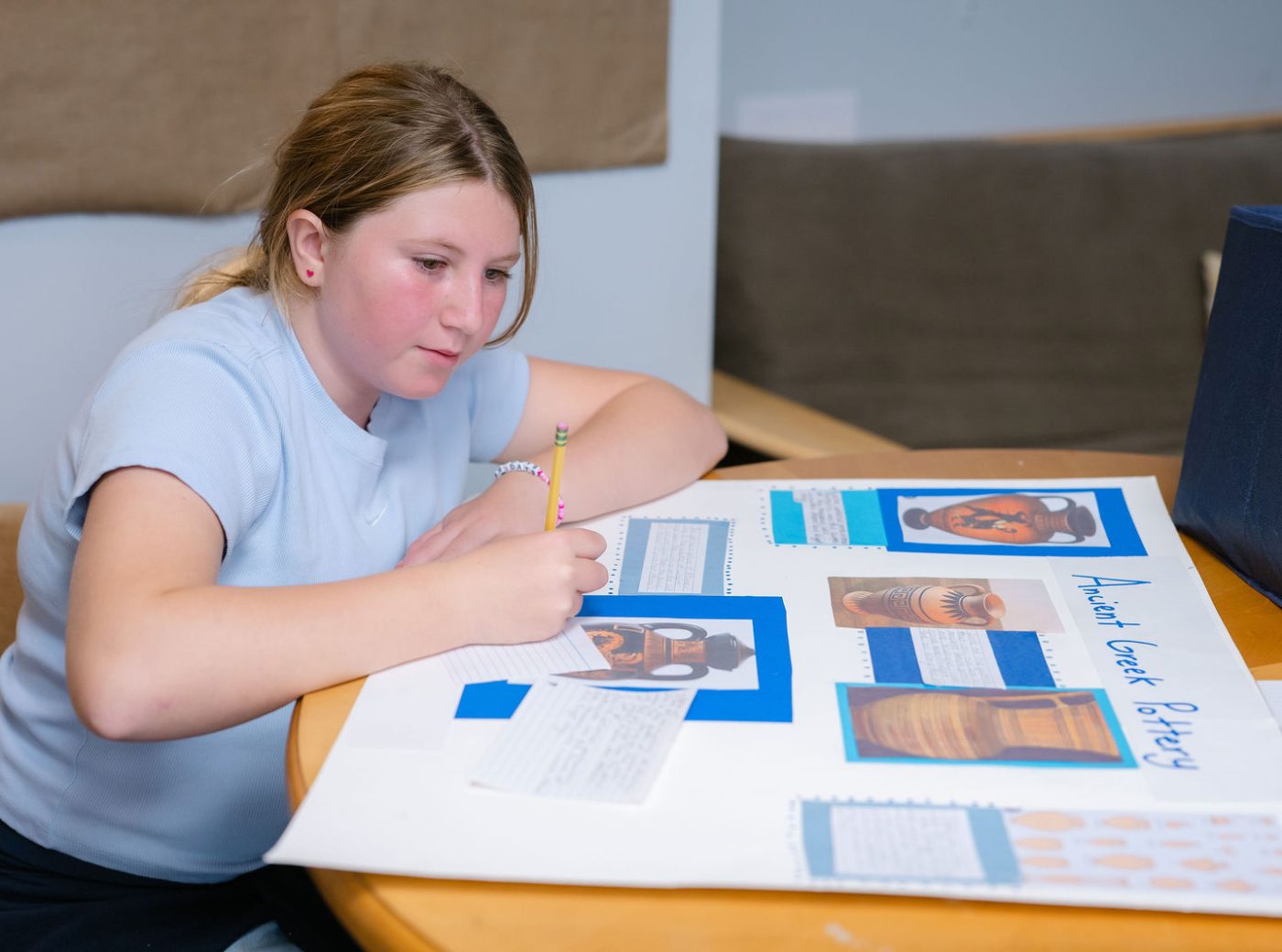
Students read deeply, annotate, discuss, and write as they study the core themes and content of U.S. history. They analyze an author’s argument and purpose, pursue research on topics of their own choosing, and connect historical patterns to the world today. This work prepares them to excel in high school AP History and English Language and Composition.
Math
Math is about more than getting the right answer. Students develop mathematical habits and ways of thinking that help them make sense of problems and solve them with confidence. Carefully sequenced problems help them understand the ideas behind mathematical rules, try different strategies, draw on their own experiences, and explain their reasoning to one another as they tackle challenging concepts. Fifth graders build on the visual models and hands-on learning they have used since kindergarten. In grades six through eight, every student follows an accelerated pathway, reaching Algebra I or Geometry by eighth grade.
Science
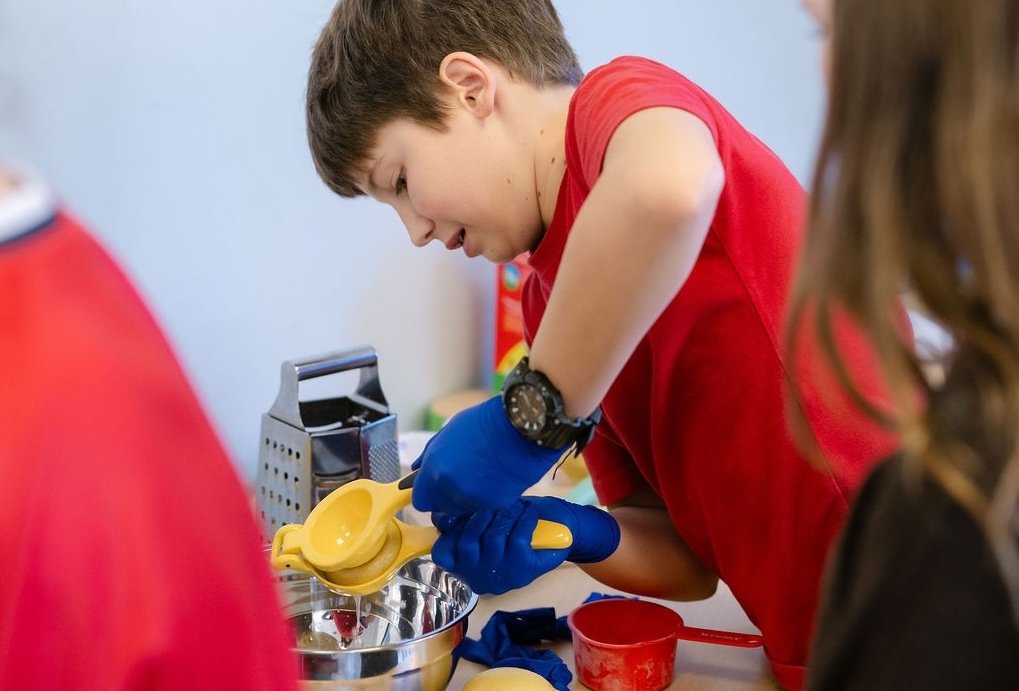
The science curriculum begins with Earth’s systems and moves into weather, energy, heredity, human health, food production, and chemistry. Questions and real-world examples make science tangible and relevant to daily life.
Spanish
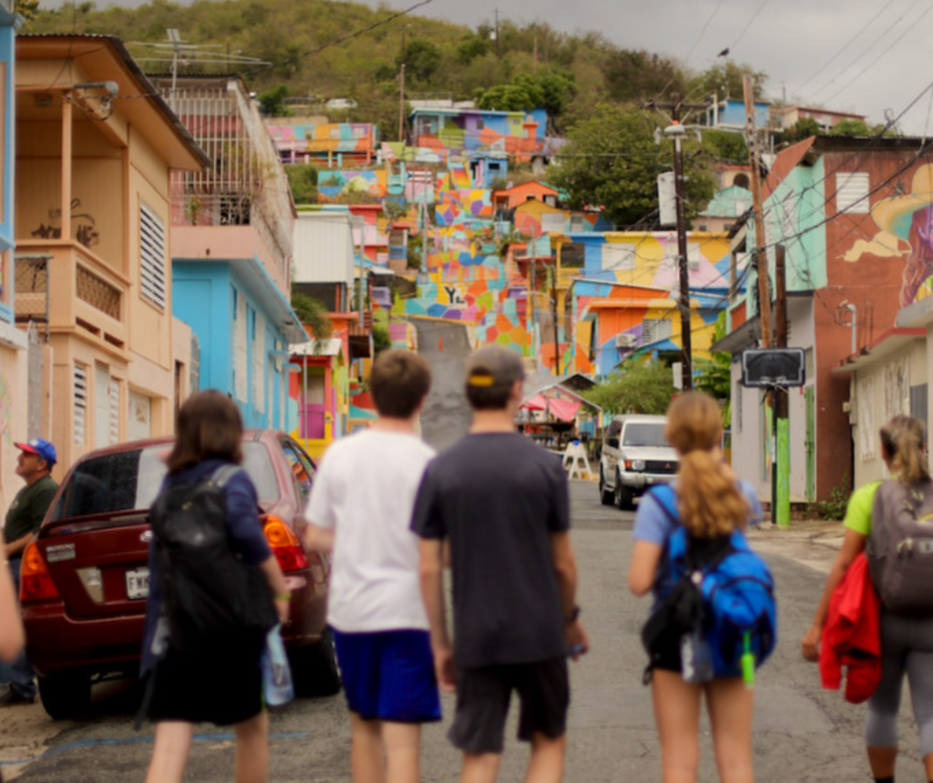
Students begin with listening, then build toward speaking, reading, and writing. Eighth graders cap it off with an immersion trip to a Spanish-speaking country, a highlight of many students’ time at CDS. They prepare by researching the region and creating projects that deepen their understanding.
Music, Art and PE
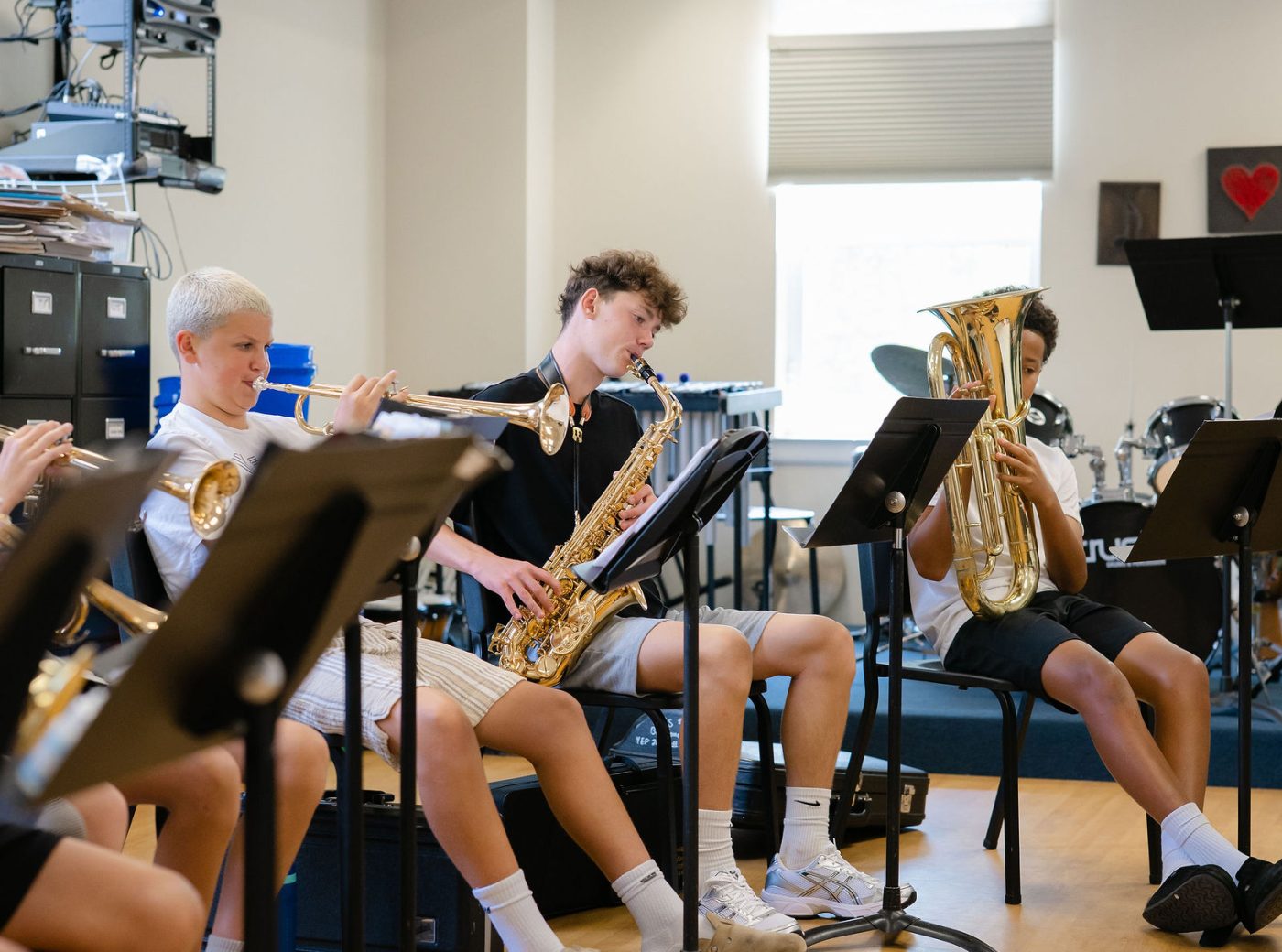
Music is a big part of the week at CDS, with classes at least four times a week. Every student chooses an instrument and plays in band, guitar, or orchestra ensembles — those who want more can join Glee or Jazz Band. PE also meets at least four times a week, and art meets twice, giving students time to move, create, and develop new skills.
“CDS taught me to ask for help. Here, you know your teachers care and want you to succeed, so coming into high school I wasn’t afraid to go to office hours or ask questions.”
As students take on more responsibility, teachers guide them in making thoughtful choices and contributing to the school community.
Habits for Learning
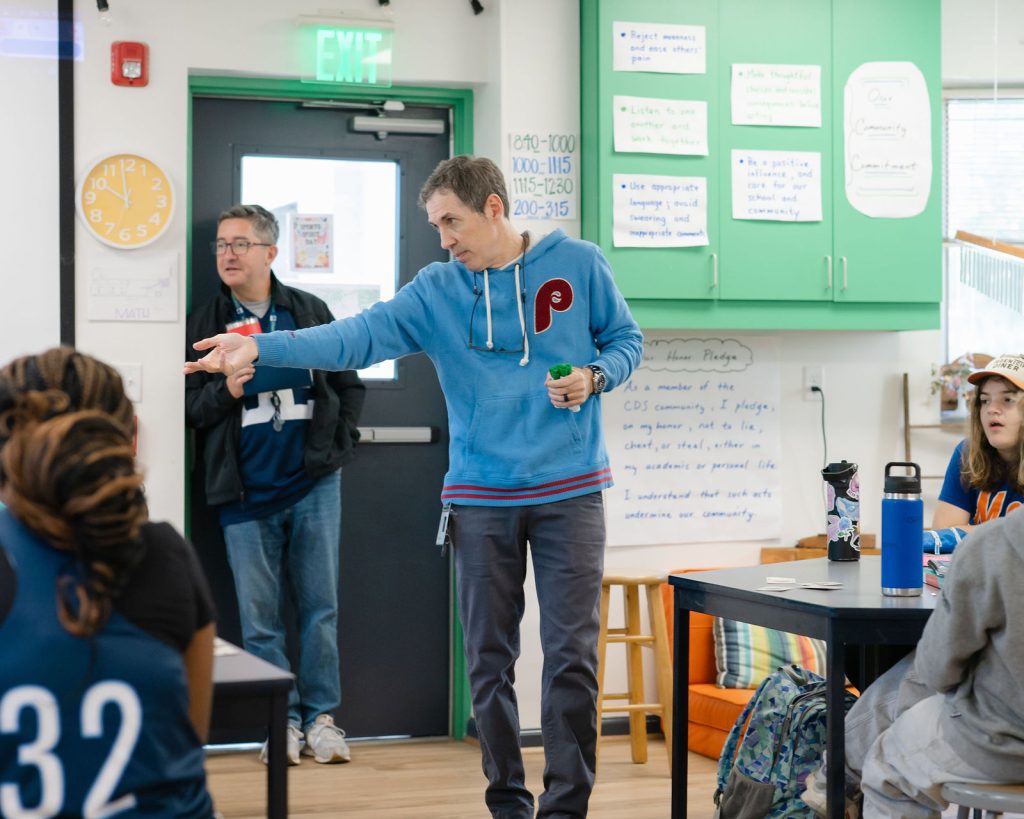
Homeroom helps students grow more independent in their schoolwork and more thoughtful in how they work with others. They learn to plan ahead, manage longer assignments, and listen when classmates see things differently.
Social & Emotional Learning
School counseling supports students as they navigate emotions, relationships, and the demands of middle school. Along the way, they learn to solve problems and ask for help when they need it.
Each middle school class is paired with a younger class. The buddies meet each week to read stories, play games, and make things together, giving middle schoolers a chance to mentor younger classmates.
Middle school gives students new ways to follow their interests, contribute to a group, and learn outside the classroom.
Wednesday Electives
Each semester brings new choices, from chess club and filmmaking to fixing everyday objects and found poetry. Students can also join the annual CDS theater production, performed each winter at PVCC.
Field Trips
Walking field trips take students into the community throughout the year. In fall, history classes visit Monticello and Montpelier, while science classes head to Luray Caverns. Spring trips include Harpers Ferry for fifth-grade history, Philadelphia for sixth-grade history, the Outer Banks for seventh-grade science, and Puerto Rico for eighth-grade Spanish immersion. Longer class trips, including overnights in every grade, give students extended time together.
Technology & AI
Students learn to evaluate sources, spot misinformation and bias, and protect their privacy online. They use AI for research, only when a teacher assigns and supervises it, so their own thinking and writing stay at the center of their work. Students and families sign a technology agreement as part of the CDS Code of Conduct, committing to use technology only for its intended academic purposes. Phones and apple watches stay at home or are stored in homerooms during the school day.
Shared Traditions
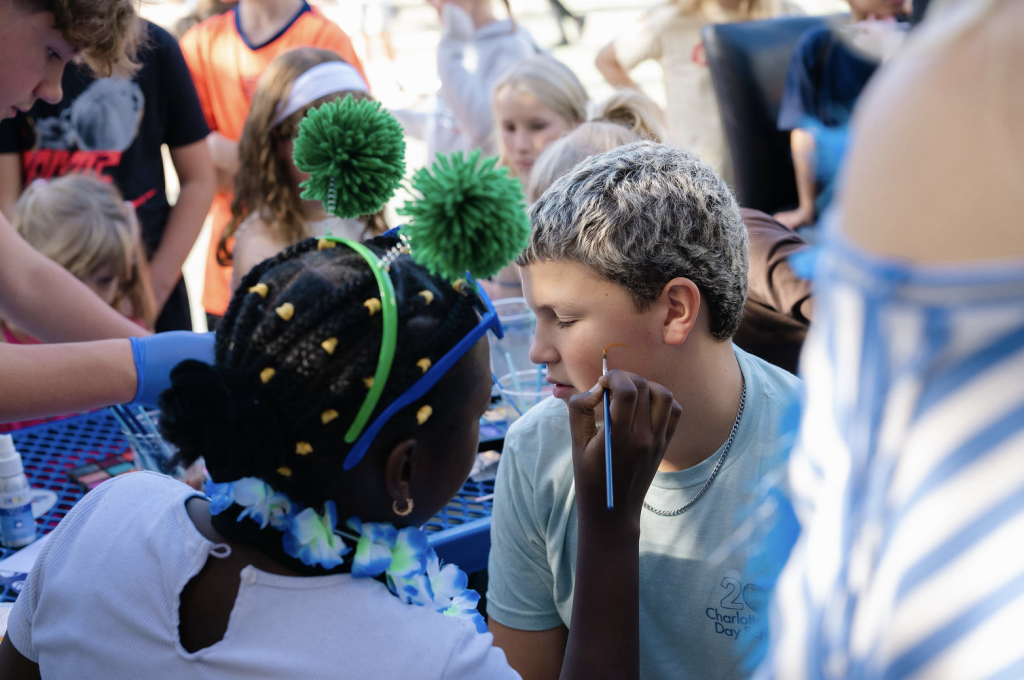
We like to have a good time around here. The Harvest Festival, MLK Day Walk, Earth Day Trout Release, and Family Fitness Fair are just a few of the ways that bring students and families together throughout the year.
The 8th grade trip was pivotal for both of my boys. They left for the trip as 8th graders and came back as high schoolers. They were wiser, more confident, and more bonded as a group!
Merrill Woodriff CDS Parent
See a middle school class in action
Tours run weekday mornings. Visit a classroom, meet our teachers, and catch a recess or two.