
20 Years of Charlottesville Day School
When Stacey and Dave Bruns founded Charlottesville Day School 20 years ago, they set out to create a school that honors both the art of teaching and the individuality of every child. Guided by research and their own experiences, they built a community rooted in trust, curiosity, and creativity. In this conversation, they reflect on what inspired their vision, how it continues to evolve, and why their original guiding statement— “Celebrate every child. Challenge every learner.”—still captures the heart of their mission.
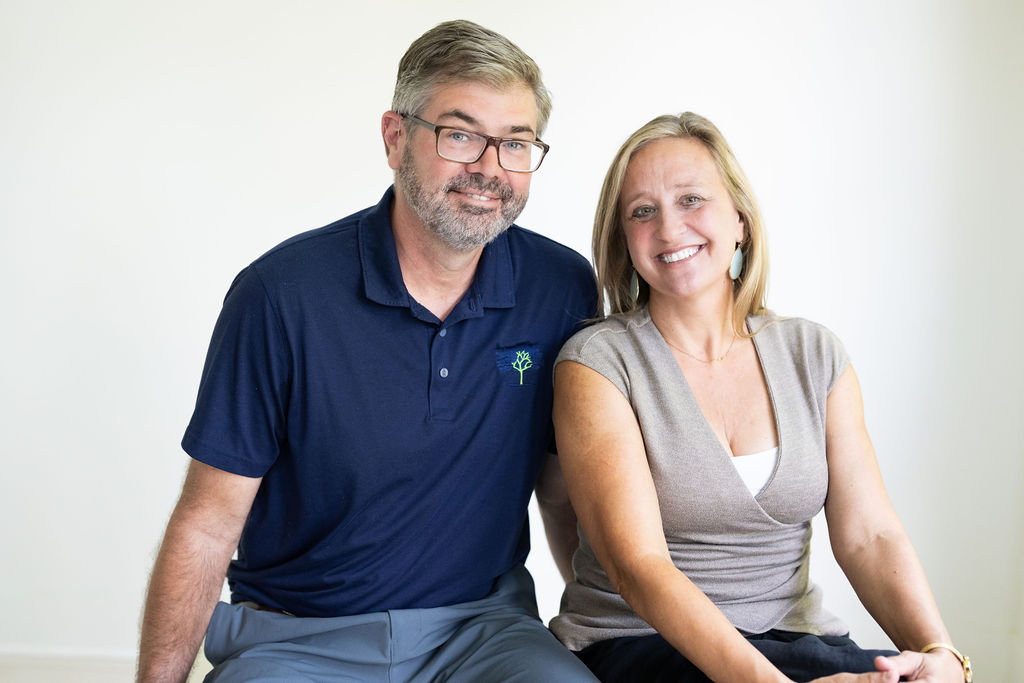
Q: What inspired you to create Charlottesville Day School?
Dave: For us, there were three seeds. First, throughout our relationship, so many of our conversations have been about education and teaching. Second, research was making it crystal clear that the single biggest factor in student success is the quality of the teacher—not curriculum, class size, or facilities. Spectacular things happen when a child has a great teacher for a couple of years in a row; unfortunate things happen when they don’t, especially early on. Third, we were watching great teachers leave the profession at alarming rates. We thought we understood why, and that it was fixable. So we took action.
Stacey: From the start, we’ve tried to honor the teacher in the classroom. Nothing replaces a good teacher connecting with an individual child. That remains front and center. The national challenges have only grown, but there are schools bucking the trend. We’re proud to be one of them.
I also felt deeply that early and middle childhood are formative years, where trust, curiosity, and creativity take root. If we got that right, kids could take it from there.
Q: Why were teachers leaving, and what makes CDS a place where exceptional educators want to teach?
Stacey: A great teacher is an artist. You can’t hand an artist a script and say, “Just get the child to pass the test.” My first year of teaching was also the first year of Standards of Learning testing, and I was blown away by how arbitrary it felt—regurgitating facts instead of teaching kids to think. At CDS, we treat teachers like the professionals they are. At CDS, we start by listening. For teachers who haven’t had that, it can be emotional to be treated with that kind of respect.
Dave: People enter teaching to help kids, and they were being pressured by various forces to do things they didn’t think were best for the child in front of them. That misalignment leads to burnout. Compensation gets mentioned more now than when we started, but initially it wasn’t one of the leading factors for why teachers were frustrated—not that they were being paid especially well. What teachers wanted was to make a difference and to trust that the next teacher would continue the growth. Policies that placed too much weight on accountability, such as No Child Left Behind, disrupted the very heart of education: the teacher. It’s a very human endeavor and you can’t script it in advance. Educators need the autonomy and creativity to respond to the unique child in front of them.
Q: What qualities do you look for in teachers?
Stacey: They’re passionate, self-directed, and driven. We look for people who were born to differentiate, who are curious and growing in their own lives. They are musicians, gardeners, and craftspeople. Above all, they’re committed to raising kind, conscientious humans and they understand that building community in their classrooms unlocks academic risk-taking.
Dave: They love the puzzle of reaching each child. They care at least as much about the child as the subject.
Stacey: Even classroom management is differentiated. A question parents ask, “What do you do when a student misbehaves?” has one honest answer. “It depends on the student and the teacher.” We find what works for that child and what the teacher can authentically implement.
Q: What have you learned as leaders that shapes how you support teachers?
Stacey: What teachers need to learn and grow mirrors what students need from them. Care, connection, trust, and love. Students also need clear goals, appropriate push, and the satisfaction of finishing what they start. There are moments when someone needs more, but the core is the same. When we give teachers the same things that they are giving their students, they flourish.
Dave: And when teachers flourish, kids do too. That’s been the through line from day one. Honor the teacher, and everything else gets better.
Q: What experiences prepared you to start a school?
Dave: Stacey experienced firsthand as a classroom teacher how early learners’ developmental needs were not aligned with the initiatives being pushed on public schools. She shared these observations with me while also having joyful stories about individual kids in her classroom. Then, in California, she experienced life in a small preschool-through-eighth-grade independent school. She was surprised by how much she liked that environment. Eventually, she started dreaming … especially on walks along the San Francisco Bay with other teachers or with me. Later, we both noticed that great teachers were leaving the profession. When we read that this mini-exodus was a national trend, we knew that was dangerous for our kids’ generation. We thought we knew why teachers were leaving. And a school built by like-minded classroom teachers could be attractive to excellent teachers and also be beneficial to our hometown and, frankly, our own kids.
Stacey: Dave’s background as an attorney helped with building institutions and understanding how people-driven organizations thrive. He knew that treating professionals like professionals had to be a priority having seen different types of leadership within a law firm.
I kept getting nudged into leadership. I started as a teacher in Hanover County, then served as assistant head at a small independent school in California. The head of school there, Nancy Diamonte, mentored me and also made sure I kept working with kids. That balance of knowing every child and staying in classrooms became my model. And we wanted this for our own children. We wrote the mission while I was pregnant with our daughter, Jane; she was in the first two-year-old class. Our son, Jack, was in the first kindergarten class.
Q: Who influenced your early planning?
Dave: We started with classroom teachers. Stacey shared drafts with experts like coach-educator Lance Weisend and UVA professor Carol Tomlinson, both teachers and practitioners at heart. They helped shape the ideas and identify teachers. On the business side, we briefly explored one partnership structure, then formed our own nonprofit soon after opening. Program revenue nearly sustained operations from the start, and donor support grew as the community saw what we were doing.
Stacey: The community’s role was real. Once families and local educators saw classrooms centered on teacher expertise and child development, then the support really came in.
Q: What were the biggest early hurdles and how did you overcome them?
Dave: Defining who we were. We weren’t a military school, Montessori, prep, all-girls, or Catholic. We were a school for teachers to execute what’s effective for a wide range of kids. That’s harder to explain with no track record and no campus. Interestingly, people in medicine got it quickly because they understand standards of care and developmentally appropriate practice. We built trust one family at a time with in-depth tours, meeting teachers, seeing classrooms. Over time, we’ve been able to show results with student growth, teacher retention, and a clear sense of purpose.
Q: Your guiding statement is “Celebrate every child. Challenge every learner.” Where did it come from, and what does it mean?
Stacey: We were drafting the mission, and I read it to a school principal we admired. She said, “You’re celebrating every child and challenging every learner.” That was it. You have to know kids and celebrate them. You can also challenge them and tell them what they need to do better.
Q: What makes CDS’s ethos unique?
Dave: We always believed it, but 20 years in we’ve seen it: The power is in a shared ethos that runs through every relationship—from our board to head of school, head to teachers, teachers to kids, kids to kids, and parents to teachers. When everyone is in alignment, the whole becomes greater than the sum of its parts. You feel it in the atmosphere. Kids want to come to school and teachers perform at a high level. That’s why the magazine’s name, Harmony, fits us: When heart, mind, and feet line up, people do their best work. Our uniqueness isn’t just the words we use; it’s that the ethos permeates daily decisions and interactions.
Stacey: If two colleagues disagree, or if we’re figuring out how to reach a particular child, the reflex is, “Let’s go back to our why.” Often the “disagreement” sets forth a meeting of the minds on how best to support or challenge each child. The habit of asking, “Is the student growing?” keeps us aligned on the ground level where it matters.
Q: What are you the proudest of across these past 20 years?
Stacey: Trusting our human instincts about what children need and watching the wider world catch up. We’ve tried programs and then dropped them; that’s growth. The clearest affirmation is our graduates. They come back. You see their values, their pride in who they’re becoming, and the thread that still connects them to this community.
Dave: When a child who persevered through adversity as a young student at CDS comes back to visit and is clearly happy and thriving in high school and wants to share with us, with a sparkle in their eyes, “It’s going well,” that’s everything.
I’m also deeply proud of our teachers who’ve flourished here. They could excel anywhere but chose the classroom. When they say they’re grateful to do their life’s work here, I feel honored in return. I’m also very conscious of the ways that the Townley Fund has changed lives and elevated the whole community. I’m grateful for the kindness of families that have made it possible for determined kids to be here.
Stacey: The culture shows up publicly, too. Our talent show is mutual celebration rather than competition. Or at a game, the biggest cheer is for a student getting their first-ever basket. So that is an ethos that is hard to teach, but it’s easy to model if you have the right teachers who embody collaboration and kindness.